
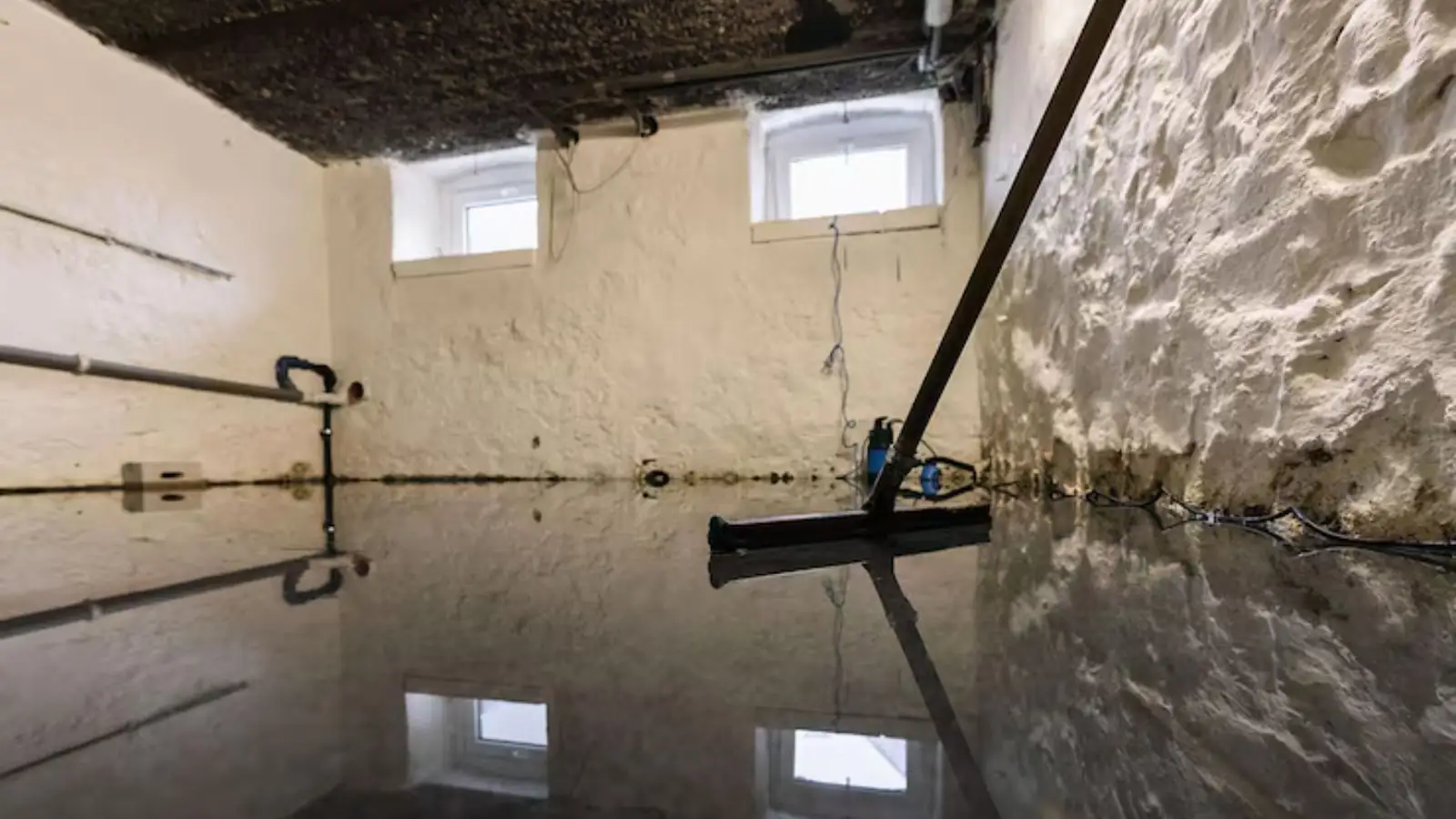
Basement water restoration in Mission Hills, CA is less common than it is in colder parts of the country, but it is no less urgent when it happens. Water in a below-grade room, a lower level or a converted garage flows to the lowest point and stays there. This guide covers what happens after the water arrives and how a restoration is organized.
If water is rising or you smell sewage, stay out and call. If any electrical risk exists, call 911 or the utility first. For the safe next steps, call (818) 337-2642.
What a basement restoration involves
Safety and source
Cut power safely, stop the source and identify the water type.
Pump and extract
Pumps remove deep water, and extraction units handle the rest.
Remove wet materials
Carpet, pad, wet drywall and stored items that cannot dry are removed.
Dry and treat
Dehumidifiers and air movers dry the space, and surfaces are cleaned.
Basements add challenges. They are enclosed, so humidity stays high, and concrete holds moisture for a long time. Drying often takes longer than in an upstairs room.
Water type decides the plan
| Source | Category | Typical plan |
|---|---|---|
| Burst pipe or water heater | Category 1 | Extract, dry, replace only what is damaged |
| Washing machine or sump failure | Category 1 or 2 | Extract, remove porous materials, dry and clean |
| Groundwater or runoff | Category 2 or 3 | Remove porous materials, clean and sanitize |
| Sewage backup | Category 3 | Protective gear, removal and disinfecting |
Clean water becomes less clean with time, so a delayed response changes the plan. Ask the technician which category applies and why.
Water in a lower room?
Call the 24/7 line. Describe the source and whether sewage is involved.
Drying a below-grade space
Dehumidifiers do most of the work in a basement, since there is little natural airflow. Air movers push dry air across walls and floors, and moisture readings are taken in concrete, framing and any remaining drywall. Equipment is checked daily and adjusted as readings improve.
Stored items are sorted. Cardboard, paper and fabric that soaked up water are usually discarded, while plastic, metal and glass can be cleaned. The water damage cleanup page covers sorting and sanitizing.
Restoration is not waterproofing
If water keeps entering through the foundation, drying will not stop it. A waterproofing or drainage contractor addresses how water gets in, and a restoration crew repairs the damage afterward. We will tell you plainly if your problem needs that trade.
For storm and groundwater entry, see flood damage restoration, which explains the safety plan for contaminated water. Insurance for flood is separate from standard homeowners coverage, so check your policy.
Three common scenarios and how they differ
A water heater failure in a garage floods a small area with clean water, and the plan is fast extraction, drying and replacement of damaged wall bottoms. A washing machine hose failure in a lower laundry room spreads wider, and carpet and drywall may be involved. A sewage backup is a different job entirely, with protective gear, removal of porous materials and disinfecting.
Groundwater entry sits in the middle. It carries soil and may be Category 2 or 3, so porous materials are usually removed. The cause also matters, since repeated entry points to a drainage or waterproofing problem rather than a single event.
Mistakes to avoid in a wet lower room
- Walking into standing water with power on.
- Using a household vacuum on water.
- Waiting for the water to drain by itself.
- Throwing away items before photographing them.
- Closing the room off with no airflow while it is still wet.
The theme is to act promptly and safely. Cutting power safely, photographing and calling quickly give you the best chance of saving materials and building a good insurance record.
Insurance notes for lower-level losses
Coverage depends on the cause. Sudden and accidental plumbing failures are often covered, while groundwater and flood are typically excluded from standard homeowners policies. Some policies also treat sewer backup as a separate endorsement, so read yours and ask your insurer.
Keep photos, a list of what was stored and the written scope from the restoration company. They make the conversation with an adjuster shorter and clearer.
What to prepare before the crew arrives
Clear a path to the lower room, and move anything from the stairs. Know where the electrical panel and the main water shutoff are. Photograph the water level and damaged items before they are moved.
If you share the property, tell neighbors and the owner. Keep a list of what was stored in the space, which helps with insurance. The crew will handle the rest, and the first call is the hardest part.
What to move out before the crew arrives
Carry out only what is safe to touch, and leave anything near standing water if power might still be on. Photograph valuables where they sit. Items on shelves and in plastic bins can often be saved, while cardboard and fabric usually cannot.
Do not carry soaked items through clean rooms. A crew can tell you which pieces to keep and which to discard, and the photos support any claim you file.
Low rooms in the San Fernando Valley are often garages, laundry rooms and half-basements instead of full basements, but the same rules apply. Water that entered from the ground, a drain or a sewer line is treated differently from water from a clean supply line, so tell the dispatcher where it came from.
Never wade through standing water if any outlet, appliance or extension cord is nearby. Shut off power at the panel only if you can reach it from a dry spot.
Safety checks before you touch anything
- If water is near outlets, appliances or a light fixture, stay out and shut off power at the panel only from a dry spot.
- Do not walk under a sagging or bulging ceiling.
- Leave the area if you smell sewage, gas or burning, and call 911 for gas or fire.
- Keep children and pets out of the wet room.
Local note: water and flood control near Mission Hills
Los Angeles County Public Works manages Pacoima Dam and its reservoir, which captures stormwater and releases it downstream to recharge the San Fernando Groundwater Basin. The county says sediment has filled about 60% of the original reservoir capacity and has a sediment-removal project in environmental review. That is a county flood-control matter, not a prediction for your address.
Check the FEMA Flood Map Service Center for your address and ask your insurer about flood coverage. Standard homeowners policies typically exclude flood, and flood insurance is available through the National Flood Insurance Program.
Source type: County public works, FEMA Flood Map Service Center, state insurance department
Basement water restoration questions
Do homes in Mission Hills have basements?
Some do, and many do not. This guide also applies to lower rooms, converted garages and any below-grade space.
How long does a basement take to dry?
It varies with the water amount and materials. A technician takes readings and tells you when it is dry.
Is a sump pump part of restoration?
Restoration can pump out water, but a sump pump installation is a separate plumbing or waterproofing job.
For nearby places, see the Pacoima page and the Panorama City page.