
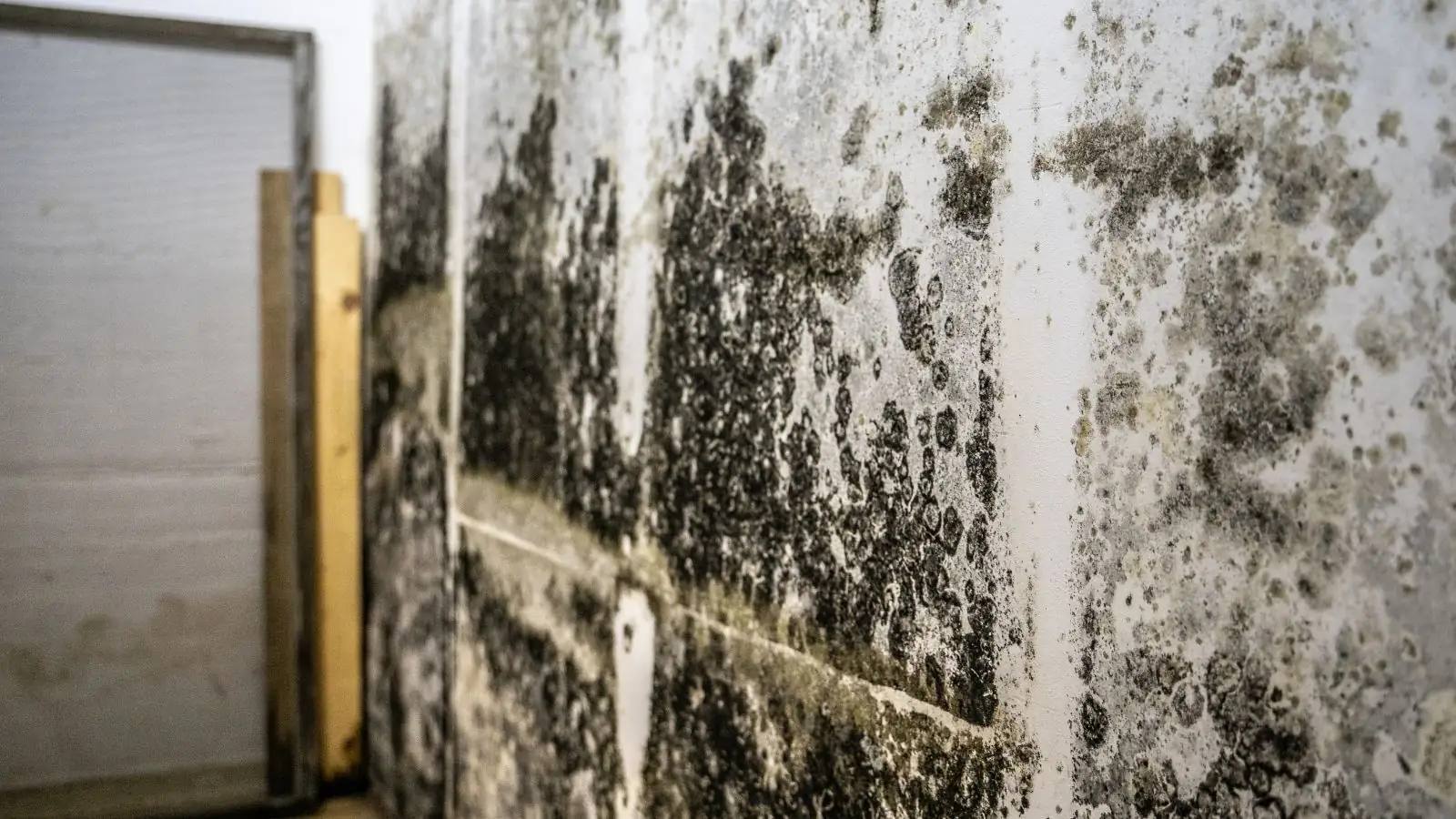
To eliminate mold in a basement in Mission Hills, CA, you have to treat the room, not just the stain. Removal clears what is there today, but elimination means the conditions that grew it are gone. That comes down to humidity, airflow, drainage and leaks, and it is worth planning before you buy a single cleaner.
This guide focuses on prevention and long-term control. For the cleanup steps themselves, the removal side is covered on the mold remediation page. Think of this as the maintenance plan that keeps a lower room clean after it has been remediated.
Why basements stay damp
Below-grade rooms sit against soil, which holds moisture and moves it through concrete slowly. They also tend to have little airflow and cool walls, so warm indoor air condenses on them. Add a dryer vent that exhausts into the room or a bathroom without a fan, and humidity stays elevated.
Condensation
Warm humid air meets cool concrete or walls and leaves water behind.
Seepage
Groundwater moves through the slab or wall, especially after heavy rain.
Plumbing leaks
Slow drips from pipes, fixtures and water heaters wet materials unnoticed.
Poor ventilation
Closed rooms with stored boxes trap moisture and give mold something to eat.
A control plan that works
- Measure humidity with a hygrometer, and check it weekly.
- Fix leaks in plumbing, roofs and exterior walls first.
- Run a dehumidifier with a drain hose so it does not need emptying.
- Direct gutters and downspouts away from the foundation.
- Keep stored items off the floor and away from walls so air can move.
- Use exhaust fans in bathrooms and laundry rooms and vent the dryer outside.
Hygrometers are inexpensive and the best early warning tool you can own. If the reading stays high for days, look for the source. A dehumidifier treats the symptom, and the leak or seepage is the cause.
What does not work
Painting over stained areas hides the problem, and the paint often peels because moisture pushes it off. Spraying a fogger or air freshener hides odors but does not remove growth. Sealing walls with a waterproof coating can trap moisture behind it if the source is not fixed.
Basement waterproofing is a separate trade from restoration. If water keeps entering through the foundation, you need a waterproofing or drainage contractor, and a restoration crew will tell you so. Our flood damage restoration page covers the cleanup side of a water entry.
| Control measure | What it does | Limits |
|---|---|---|
| Dehumidifier | Lowers humidity in the room | Does not stop leaks or seepage |
| Exhaust fan or vent | Moves moist air outdoors | Needs a proper duct and a place to exhaust |
| Gutter and grading fixes | Sends roof and yard water away from the foundation | Does not fix plumbing leaks |
| Moisture inspection | Locates hidden wet areas | Does not remove growth |
| Professional remediation | Removes existing growth safely | Needs the moisture source fixed too |
Mold keeps coming back?
A moisture inspection can find what the surface cleaning missed. Call the line to talk it through.
Testing and clearance
After remediation, a visual check confirms removal and drying. Some homeowners add independent clearance testing, which uses a separate tester so the company that removed the mold is not grading its own work. A lender or buyer in a home sale may ask for that documentation, and you should ask them what they will accept.
If you are unsure whether a smell or a stain means mold, an inspection is cheaper than guessing. EPA guidance says to consult a health professional about health concerns before cleaning. We do not offer health advice, and that question belongs to your physician.
A simple routine to keep a lower room dry
Make it a habit, not a project. Once a month, look at the corners, the area behind stored boxes and the base of exterior walls. After any heavy rain or plumbing repair, check again within a day or two.
- Check the hygrometer and note any rise that lasts more than a few days.
- Empty or drain the dehumidifier on a schedule, or use a hose to a drain.
- Lift boxes onto shelves and leave a gap between stored items and walls.
- Test the bathroom fan by holding a tissue to it and confirming it pulls.
- Look at downspouts and yard slope outside the room.
Storage habits matter more than people think
Cardboard, paper, old upholstered furniture and fabric all feed mold when they get damp. Plastic bins with lids keep items clean, and metal or plastic shelves hold them off the floor. A packed room also blocks airflow, which is how mold establishes itself in the back corners.
If you store items for a long time, check them twice a year. Anything that smells musty or feels damp should be dried or discarded. Valuable or sentimental items should be dried quickly and, if needed, handled by a specialist.
When the numbers do not improve
If humidity stays high even with a dehumidifier running, there is probably a source you have not found. A moisture inspection can map hidden wet areas, and a plumber can test lines. If growth returns after cleaning, treat it as a signal and not as bad luck.
A simple weekly check for the first two months
After a cleanup, a short routine catches problems early. Once a week, look at the same wall corners and the base of any pipes, sniff for mustiness and glance at the humidity reading. Write the date and what you saw on a note taped nearby.
Two clean months in a row is a good sign. Any change, such as a new stain or a damp patch, is worth a photo and a call before it spreads.
Local note: moisture control in Mission Hills
Water reaching Mission Hills homes comes through the Los Angeles Department of Water and Power, so unexplained high water use may signal a hidden leak. Ask LADWP how to read your meter, and check it with all fixtures off.
For flood exposure, the FEMA Flood Map Service Center shows risk by address, and flood coverage is separate from standard homeowners insurance according to the California Department of Insurance. If a repair involves changing plumbing or venting, ask the Los Angeles Department of Building and Safety about permits.
Source type: City utility, FEMA Flood Map Service Center, California Department of Insurance
Controlling basement mold questions
Do Mission Hills homes need a dehumidifier in a lower room?
It depends on the room and the readings. If a hygrometer shows humidity staying high, a dehumidifier helps, but find the moisture source too.
Can I prevent mold forever?
No one can promise that. You can keep moisture under control, which is what mold needs to grow.
How often should I check a lower room?
A quick look every few weeks, plus after any big rain or plumbing repair, catches most problems early.
Neighboring areas deal with similar issues. The Granada Hills page and the Panorama City page explain what shapes water problems in those places.