
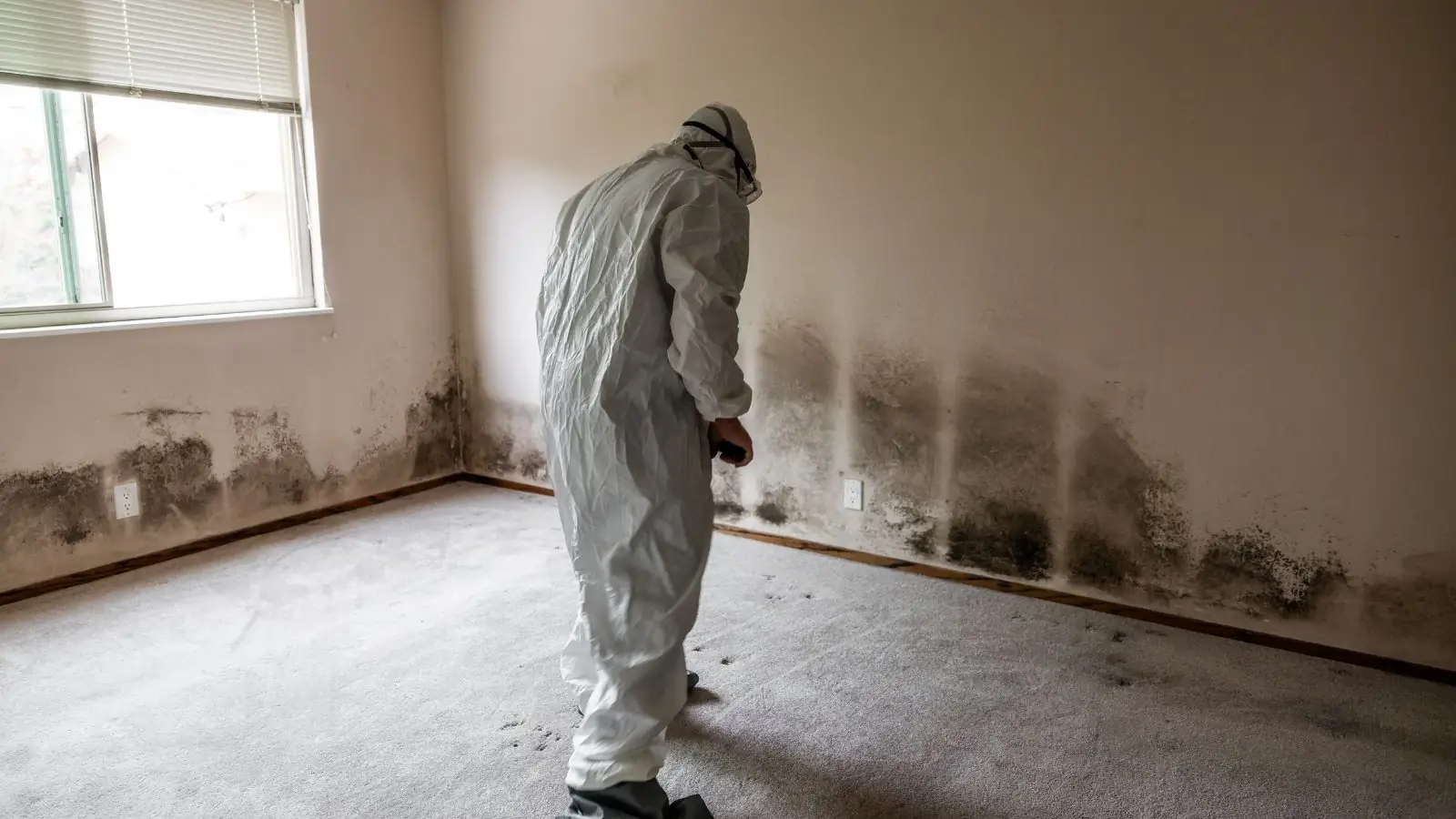
If you are trying to figure out how to remove mold from a basement in Mission Hills, CA, the first question is not about cleaners. It is about where the moisture is coming from. Mold lives on moisture, so scrubbing a wall that keeps getting wet only clears the surface for a few weeks.
Basements are less common across the San Fernando Valley than in colder parts of the country, so this guide also applies to any below-grade room, converted garage or lower-level storage space. The same steps hold for each. You find the water, you dry the space, you remove or clean what is affected and you check the result.
Step one: find and stop the moisture
Walk the space with a flashlight and look for staining, a musty smell, peeling paint and a damp feel in the air. Check around pipes, the water heater, the washing machine hookups and exterior walls. Look at the ground outside for places where water might collect near the foundation.
If you cannot find the source, a moisture meter and a thermal camera can show wet areas behind surfaces. A leak, a poor drainage slope and indoor humidity from drying clothes can all feed mold. Until the source is addressed, any removal is temporary.
Step two: decide whether this is a homeowner job
EPA guidance says a mold patch smaller than about 10 square feet can often be cleaned by a homeowner. Larger areas, extensive water damage and anything tied to sewage call for professional help. The EPA also says to consult a health professional before cleaning if anyone in the home has health concerns.
| Situation | Homeowner cleanup | Call a professional |
|---|---|---|
| Small patch on a hard surface, under about 10 square feet | Often reasonable with detergent, water and full drying | If it returns quickly or the source is unclear |
| Mold on drywall, carpet or insulation | Porous materials usually must be removed | Often, especially if more than a small area |
| Growth after a flood or sewage backup | No | Yes |
| Musty smell with no visible growth | Not a cleanup job yet | Inspection to find hidden moisture |
| Anyone in the home with health concerns | Talk to a physician first | Yes |
Step three: clean or remove, as the material allows
Hard surfaces such as concrete, tile and sealed wood can be scrubbed with detergent and water, then dried completely. Porous materials such as drywall, carpet, ceiling tile and insulation absorb moisture and growth, so they are usually cut out and bagged. Painting or caulking over mold is not a fix, because the finish tends to peel.
Wear a fitted respirator, gloves and eye protection if you do any cleanup. Seal the work area from the rest of the house with plastic, and keep the HVAC system off while you work, since running it can spread mold. Bag debris before carrying it through the home.
Mold is bigger than a patch?
Call the line and describe what you see. A technician can explain inspection and scope before work starts.
Step four: dry everything and keep it dry
Dry the space fully with air movers and a dehumidifier, and keep humidity down afterward. A closed basement that stays damp will regrow mold in weeks. If the problem began with a leak, the water mitigation page explains how professional drying works.
No one can promise mold will never return. What you can control is moisture, through repairs, grading, ventilation and monitoring. A cheap hygrometer on the wall is the easiest early warning.
When removal means a professional crew
A professional job uses containment barriers, negative air machines with HEPA filtration and protective gear, and it follows the ANSI/IICRC S520 standard. Afterward, a visual check and, where used, testing show whether the work is complete. The mold remediation page covers the whole process in detail.
Costs depend on the affected area, the materials, the containment needed and the rebuild. Ask for the scope to be explained in writing before work starts. Be wary of any quote that skips moisture inspection.
Common mistakes that make basement mold worse
The most common mistake is cleaning without fixing the source. A bleach wipe-down looks good on Monday and the stain is back by the next rain. The second mistake is running a fan that blows spores through the rest of the house, which spreads the problem instead of containing it.
Other mistakes include storing cardboard boxes against damp walls, leaving wet carpet in place and sealing a damp wall with paint. Each one holds moisture in the room and gives mold a place to grow. If you are unsure, stop and get the area inspected before you do more.
What to document before you start
Take dated photos of the growth and the surrounding area, along with any plumbing or roof leak that caused it. Keep receipts for supplies. If you plan to claim on insurance, or if you rent and need to notify a landlord, this record matters more than any story you tell later.
Write down when you first noticed the problem and what you did about it. Sudden and accidental losses are often covered by homeowners policies, while long-term neglect is often excluded, so a clear timeline helps. Ask your insurer what it needs, and do not throw away materials before taking photos.
Keeping mold from coming back after cleanup
Once the surface is clean and dry, the job shifts to prevention. Keep stored boxes a few inches off the floor and away from exterior walls so air can move behind them. Use plastic bins instead of cardboard, since cardboard holds moisture and feeds growth.
Watch the room for a month. A cheap hygrometer shows humidity, and a reading that stays above about 60 percent means the space still needs attention. If a stain or smell returns in the same place, the moisture source was not fully fixed, and that is the moment to call for an inspection instead of cleaning again.
Local note: Mission Hills, CA
Mission Hills is part of the City of Los Angeles, and water service is provided by the Los Angeles Department of Water and Power. In 2019, a 72-inch LADWP trunkline broke on Woodman Avenue during rain, and reporters described a yard and garage flooding at one home. Garages and low rooms are where water collects first, so check them after any large wet event.
If a rebuild after mold removal needs a permit, ask the Los Angeles Department of Building and Safety, because permit rules vary by the kind of work. Check your address on the FEMA Flood Map Service Center, and ask your insurer about flood coverage, which standard homeowners policies typically exclude.
Source type: City utility and utility-statement reporting, FEMA Flood Map Service Center, California Department of Insurance
Basement mold questions for Mission Hills homes
Does a garage or low room in Mission Hills count as a basement for mold?
For mold purposes, yes. Any below-grade or low-lying room that stays damp, like a converted garage or storage room, can grow mold the same way a basement does.
Is bleach the best way to kill mold?
EPA guidance suggests scrubbing hard surfaces with detergent and water and drying completely. Bleach does not fix a moisture problem, and mixing chemicals is dangerous.
How do I know whether mold is hidden behind a wall?
A musty smell with no visible source is a clue. A moisture inspection with meters and a thermal camera can show wet areas without opening the wall.
Nearby neighborhoods share the same issues, and the Pacoima page and the Sylmar page explain local water conditions in those places.