
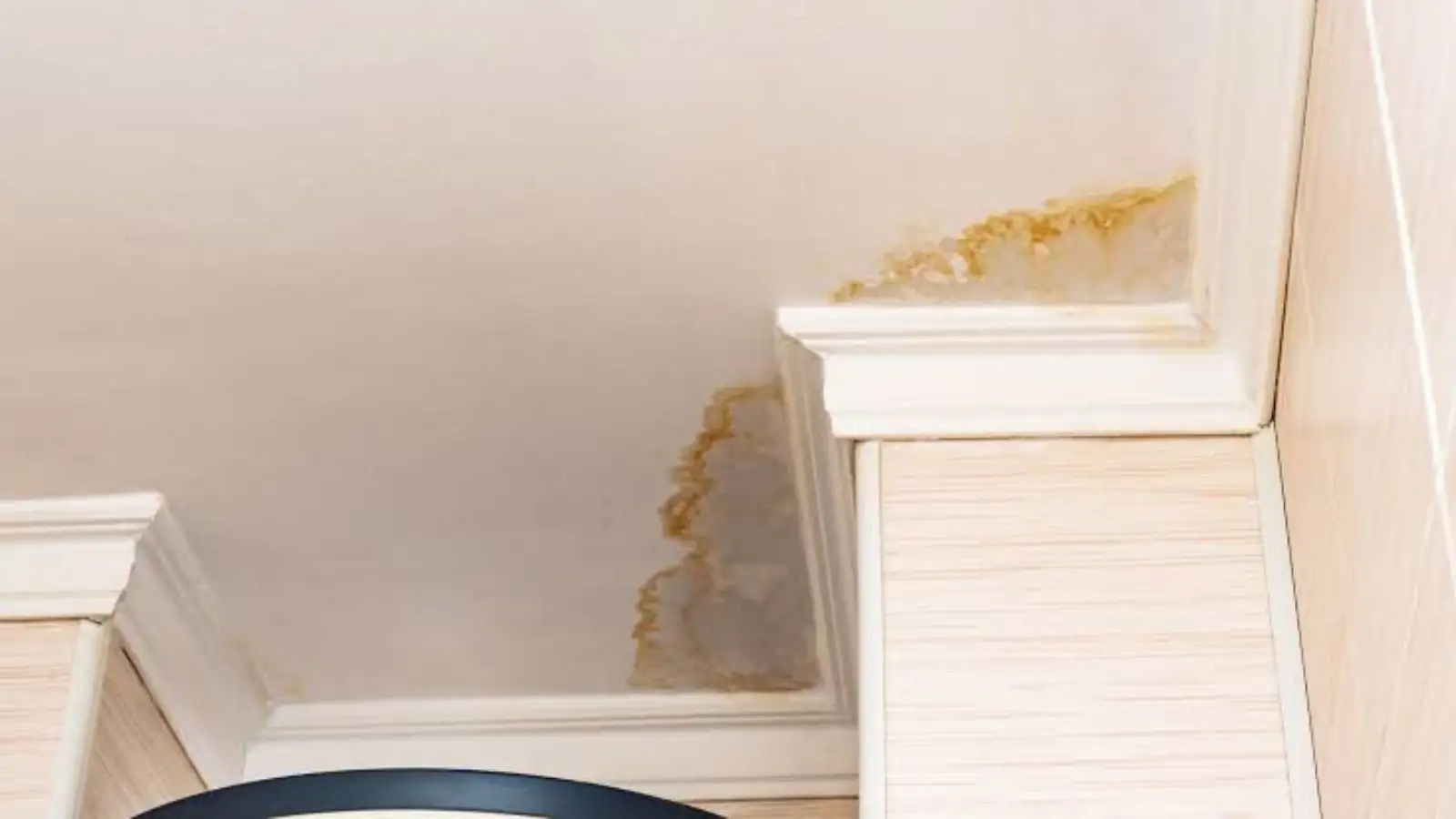
Minor ceiling water damage in Mission Hills, CA is a small stain, a faint ring or a patch of peeling paint with no sag and no active drip. It is easy to ignore, and it is also easy to misjudge. This guide helps you decide whether a small stain is a quick fix or a sign that something bigger is happening.
The test is not how big the stain is. It is whether the moisture is gone, whether the material is solid and whether the source has been fixed. A small stain with an active leak behind it is more serious than a large stain that is old and dry.
Signs that it really is minor
Dry to the touch
The stain feels dry, and a moisture meter reads the same as nearby ceiling.
Firm drywall
Pressing gently does not leave a dent or feel soft.
No spread
The stain has the same shape over several weeks and does not grow after rain or showers.
Known source
You know what caused it, such as a one-time overflow, and it has been fixed.
Signs it is not minor
A stain that grows, darkens after rain or appears below a bathroom suggests ongoing moisture. A musty smell, bubbling paint or soft spots suggest water has been there a while. A stain in a ceiling with insulation above can hide wet material.
| Observation | Probably minor? | Action |
|---|---|---|
| Faint ring, dry, firm, unchanged | Yes | Prime and paint |
| Brown stain that returns after painting | No | Find the moisture source |
| Stain below a bathroom | Possibly not | Check plumbing and the fan |
| Stain with soft spots | No | Cut out wet drywall |
| Stain plus musty smell | No | Inspect for hidden mold |
Not sure it is minor?
Call the line and describe the stain. A technician can explain how a moisture check works.
How to fix a truly minor stain
- Confirm the source is fixed and the ceiling is dry.
- Wipe loose dust and any flaking paint.
- Apply a stain-blocking primer, covering the stain and a margin around it.
- Let it dry fully, then apply ceiling paint to the whole plane for an even look.
- Check the area after the next rain or heavy shower use.
Regular paint alone will not hold back a water stain. The stain bleeds through unless you use a stain-blocking primer first. If the stain comes back through the primer, the moisture is still active.
When a small stain deserves a pro
Stains in ceilings below bathrooms, kitchens and rooftops are worth an inspection, because the leak may be intermittent. A stain that keeps reappearing is a clue the problem is real. See the water damage repair page for how a professional approaches it, and the mold remediation page if there are signs of growth.
If you are a tenant, report the stain in writing even if it seems small, and keep a copy. A minor stain that is documented early is easier to resolve than a major one that surfaces later. Take dated photos with a ruler or coin for scale.
Why minor stains keep returning
A stain that comes back through new paint has one of three explanations. The source is still active, the material underneath is still damp or the paint was not suited to cover a stain. Fixing the source, drying the material and using a stain-blocking primer addresses all three.
Intermittent leaks fool people. A condensate line that clogs only in summer or a roof flashing that leaks only in strong rain can produce a stain that grows twice a year. Mark the edge of the stain with a pencil and date it, then check after wet weather.
Choosing primer and paint for a ceiling
Use a stain-blocking primer, either oil-based or a quality water-based stain blocker made for the purpose. Follow with a flat ceiling paint, which hides surface flaws better than glossier finishes. Cover the whole ceiling plane so the repair does not show as a patch.
If the stain is large or the texture is cracked, prepping matters more than the paint. Scrape loose material, sand the edges and fill gaps before priming. Good prep makes a stain repair look like it was never there.
A typical example: the one-time overflow
An upstairs tub overflows once, the water soaks the ceiling below and leaves a brown ring. The drain is cleared, the bathroom is dry and the ceiling below dries over a few days. A moisture reading confirms the board is dry, and primer and paint finish the job.
The key in this example is that the cause was a single event, and it is documented. If the ring grows two weeks later, the story has changed. At that point, treat it as an ongoing leak and call for an inspection.
How to tell a minor stain from an active leak
Mark the edge of the stain lightly in pencil and write the date beside it. Check again after a few days and after the next rain or the next use of the upstairs bathroom. A stain that stays inside its pencil line and feels dry is likely old.
A ring that grows, a spot that feels cool to the touch or a ceiling that sags a little each day means water is still arriving. That needs a plumber or roofer first and repair after.
Even a small stain deserves a look in the attic or the space above if you can reach it safely. Check for damp insulation, a drip mark on a pipe or a daylight gap near a roof penetration. Photograph what you see, then use that information when you call a plumber or roofer.
If the area above is not safely reachable, leave it to a professional. A fall from an attic hatch causes more harm than most stains do.
The industry reference for water loss work is ANSI/IICRC S500, the Standard for Professional Water Damage Restoration. It describes water categories, drying goals and how to document readings. Citing it here is not a claim about any certificate. It simply gives you a published benchmark to ask a company about.
Safety checks before you touch anything
- If water is near outlets, appliances or a light fixture, stay out and shut off power at the panel only from a dry spot.
- Do not walk under a sagging or bulging ceiling.
- Leave the area if you smell sewage, gas or burning, and call 911 for gas or fire.
- Keep children and pets out of the wet room.
Local note: tenants and landlords in Mission Hills
Many Mission Hills residents rent, and the community is part of the City of Los Angeles. If you rent here, notify your landlord in writing and ask the City of Los Angeles housing department about tenant rights and repair responsibilities that apply to your building.
For permits tied to ceiling repair that involves wiring or structure, ask the Los Angeles Department of Building and Safety. Permit rules vary by the kind of work.
Source type: City department guidance
Minor ceiling water damage questions
Can I just leave a small ceiling stain in Mission Hills?
If it is dry, firm and unchanged, it may be cosmetic. If it grows or returns, it is not minor.
Will primer hide a stain permanently?
A stain-blocking primer usually does, but only if the moisture is gone.
When should I get a moisture reading?
Any time you are unsure. A reading takes minutes and tells you whether the area is dry.
If your home is nearby, the Panorama City page and the Granada Hills page explain housing types where small stains turn into larger problems.