
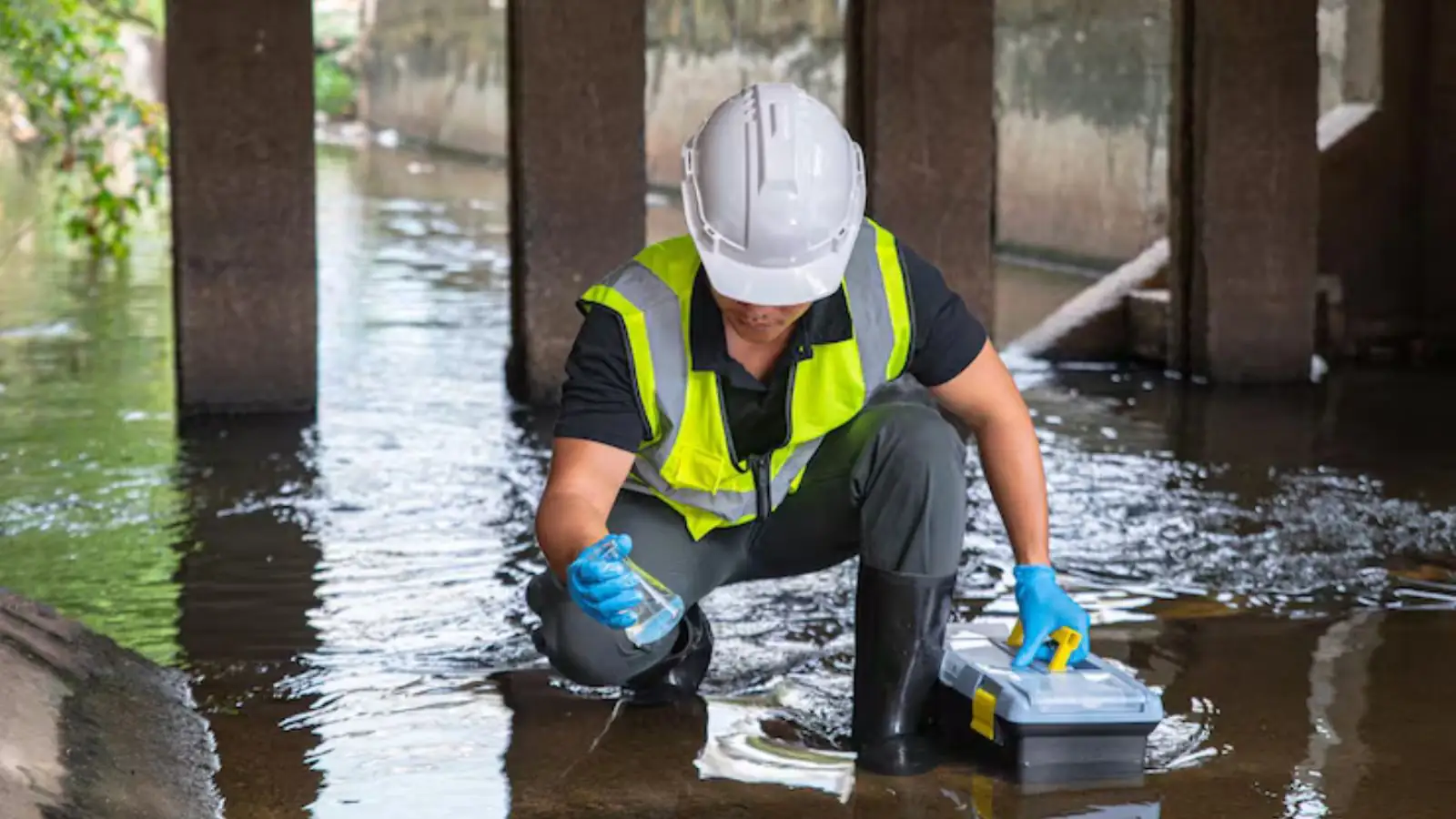
What is water damage restoration? In plain terms, it is the process of stopping water, removing it, drying the structure, cleaning and sanitizing what was touched and rebuilding what could not be saved. In Mission Hills, CA that process begins with a call, often at an inconvenient hour, and it ends when your home is dry, clean and repaired.
The industry reference for the work is the ANSI/IICRC S500 standard for water damage restoration. You do not need to read it to hire a company, but you can ask whether the crew works to it. This guide explains the stages, the vocabulary and the decisions you will face, in the order they usually happen.
The five stages of a restoration job
Emergency contact
You call, describe the loss and the dispatcher explains first steps.
Assessment
A technician inspects, takes moisture readings and classifies the water.
Extraction and mitigation
Standing water is removed and drying begins.
Cleanup and sanitizing
Wet materials and debris are removed and surfaces are treated.
Repair and rebuild
Drywall, flooring, paint and finishes are replaced.
Not every job uses every stage. A small clean-water leak may skip heavy cleanup, and a flood may need extra safety steps. The sequence matters, because rebuilding before drying is the most common way a small loss becomes a large one.
The vocabulary you will hear
| Term | What it means | Where it matters |
|---|---|---|
| Category 1, 2, 3 | Water contamination levels from clean to grossly contaminated | Decides what can be saved |
| Class 1 to 4 | How much of the structure is wet and how fast it will dry | Decides equipment and time |
| Mitigation | Stopping the spread and starting drying | First 24 to 72 hours |
| Extraction | Pulling standing water out with pumps and vacuums | Early in the job |
| LGR dehumidifier | A dehumidifier made for water loss drying | Throughout drying |
| Scope of work | The written list of what will be done | Before work and for insurance |
Categories describe the water, and classes describe the wetness. Ask the technician which category and class your loss is. The answers explain the plan and the price.
Have water in your home?
Call the 24/7 line. The scope and price are explained before work starts.
What restoration does not cover
Restoration repairs damage after water gets in. It does not repair the broken pipe, fix a leaking roof or waterproof a foundation. Those are plumbing, roofing and waterproofing trades, and a restoration crew will tell you so.
It also does not promise insurance approval. Insurers decide coverage based on your policy and the cause of the loss. The crew can document moisture readings, photos and a written scope, which supports the claim without promising the result.
How long does it take?
Mitigation often takes a few days of drying, and rebuild adds time depending on materials. A small loss may be finished in under a week, and a larger one can take much longer. The technician can estimate after the first assessment, and readings show when the structure is dry.
The page for each stage goes deeper. See water mitigation for drying, water damage cleanup for removal and sanitizing and water damage repair for the rebuild.
What to say when you call
- Where the water came from, if you know, and whether it is still running.
- Which rooms and floors are wet and roughly how much area.
- Whether the water looks clean, cloudy or smells like sewage.
- How long ago it started.
- Whether anyone has turned off power or water.
- Your nearest cross streets.
You do not need technical words. Plain descriptions such as a pipe burst under the sink or the carpet is soaked in the hallway are all a dispatcher needs. The more you can say, the better the first plan.
Common misunderstandings
Some people think a wet house will dry on its own if the windows stay open. Surface moisture may leave, but wet framing and drywall hold water for a long time. Others think fans alone are enough, though without dehumidifiers the moisture only moves around.
Another misunderstanding is that restoration is the same as a remodel. Restoration returns the home to its pre-loss condition, while a remodel changes it. If you want to upgrade finishes during repair, say so early so the scope can reflect it.
Why the first day matters
Water spreads, and materials absorb it more with every hour. A same-day start often decides whether baseboards, drywall and flooring can be dried or must be replaced. Even if you cannot reach the source or the panel, calling quickly gets planning started.
Document what you can, safely, while the crew is on the way. Photos and a short note of times help later with any claim. Then leave the technical decisions to the technician and ask questions as they work.
Restoration versus a rebuild
Restoration aims to dry and save what can be saved, such as framing, subfloors and sound drywall. A rebuild replaces what could not be saved and returns the room to normal. Many jobs include both, and they are often priced and scheduled separately.
Knowing the difference helps when you compare quotes. A company that only dries is not quoting a rebuild, and one that only rebuilds may skip the drying that protects the new materials.
The category of water also matters. Clean supply line water, gray water from appliances and black water from sewage call for different safety steps and different decisions about what can stay. Ask the company which category your loss falls in and why. A clear answer builds trust.
Local note: restoration in Mission Hills
Mission Hills is a neighborhood of the City of Los Angeles in the San Fernando Valley, with water supplied by the Los Angeles Department of Water and Power. In 2019, a 72-inch trunkline installed in 1914 broke on Woodman Avenue, and the utility said it was scheduled for replacement within a few years. Public mains and private plumbing are different problems, and a restoration call usually involves the private side.
For rebuild permits, ask the Los Angeles Department of Building and Safety, since permit rules vary by the kind of work. For flood questions, check the FEMA Flood Map Service Center, because flood is typically excluded from standard homeowners policies.
Source type: City utility, utility-statement reporting, city department guidance, FEMA
Want to talk through your own loss?
Call the 24/7 line and ask which stage your situation is in and what should happen first.
What is water damage restoration questions
Is water damage restoration the same as plumbing repair in Mission Hills?
No. A plumber fixes the pipe, and restoration removes water, dries the structure and repairs damage.
Does restoration include rebuilding?
Often yes, though some companies stop at drying. Ask whether rebuild is included or quoted separately.
Why does the water category matter?
It decides what is dried and what is discarded. Contaminated water means porous materials are usually removed.
For local conditions in nearby places, see the Sylmar page and the Pacoima page.